Every comparison of these two is written by someone selling one of them, including this one, so here is the version with the uncomfortable parts left in.
What each is actually good at
A visualisation studio gives you accuracy, art direction, consistency and someone answerable. They work from your model, so the building in the image is the building in the drawings. They can produce eight views that agree with each other. They can be told "north-facing, 4pm, late September" and deliver exactly that. If it is wrong, you tell them and they fix it.
AI rendering gives you speed and volume at a price that changes what gets rendered at all. A photoreal image is 4 credits ($0.35) and takes under a minute. What it cannot promise is that the building is exactly yours, or that six images will agree with each other.
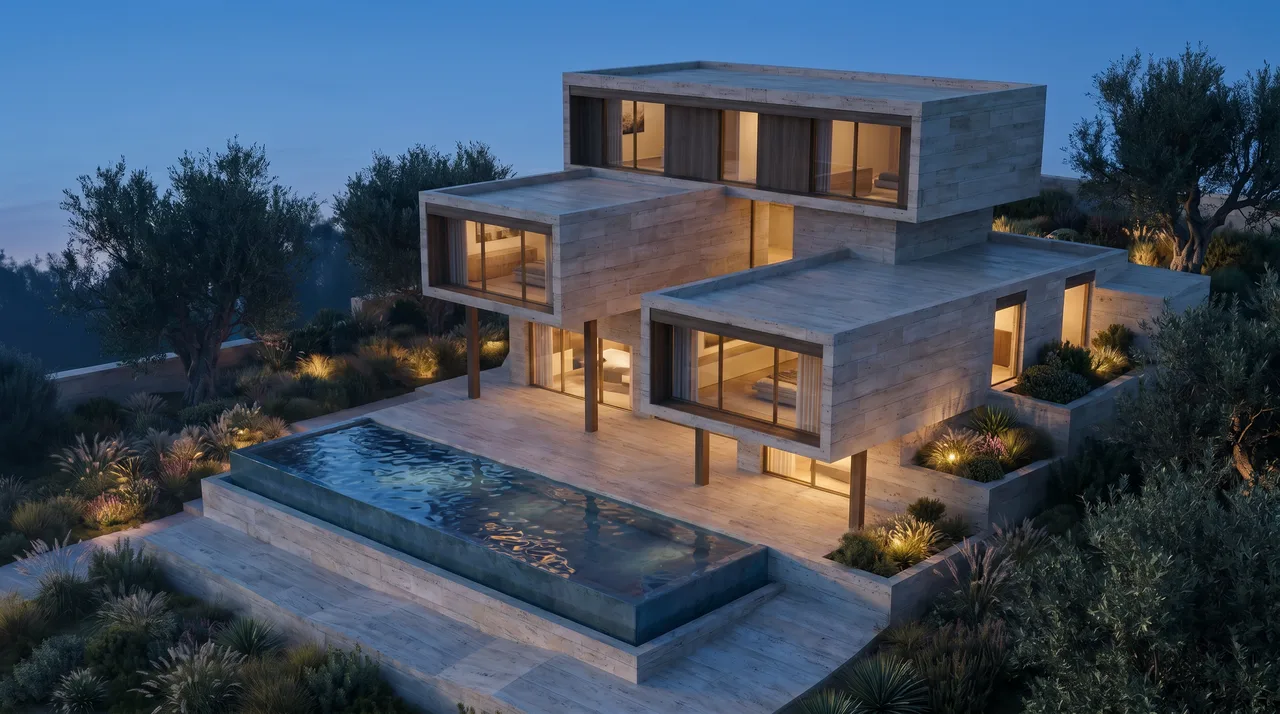
Four times you should pay a human
- A development that is selling off-plan. The imagery is the product. Buyers make six-figure decisions on it, and the accountability of a studio is part of what you are buying.
- A set that must be internally consistent. Eight views of one building where the same window has to be the same window in all eight. Generated views do not promise that.
- Anything a planning authority will scrutinise. Verified views, accurate montages and anything where the image is evidence rather than illustration.
- When the client is paying for visualisation specifically. If it is a line item on the fee, deliver the thing they paid for.
Four times AI is obviously right
- The third option nobody budgeted for. A client asks what it looks like in brick. Twenty minutes, three versions, no renegotiation.
- Volume work with a short shelf life. Listing photos, staged rooms, social posts, a twilight hero shot.
- Concept stage. When the design is still moving, a rendered image that is 90% right is more useful today than a perfect one next week.
- When the alternative is nothing. This is the honest majority case. Most projects do not render most of their decisions, because the cost of a render exceeds the value of having one. Those jobs are not being taken from a studio; they never existed.
The hybrid most practices land on
Use AI through the whole concept and options stage, where speed is worth more than precision, and bring a studio in at the point where the design is fixed and the imagery becomes a deliverable. Practices that work this way report a curious second-order effect: they explore more options, because exploring stopped being expensive, and the brief that reaches the studio is better for it.
The costs to compare honestly
Do not compare "one AI image" against "one studio image". Compare the real workflow: the number of attempts you will actually run, the re-runs when the design drifts, the upscale if it is going to print, and your own time reviewing output. It is still dramatically cheaper — just not by the factor a single-image comparison suggests.
Common questions
Is AI rendering cheaper than a visualisation studio?
By orders of magnitude — 4 credits ($0.35) for an image rather than several hundred dollars. But it cannot promise accuracy to your drawings.
When should I still hire a visualiser?
Off-plan sales imagery, a set of views that must agree, anything a planning authority will scrutinise, and any job where visualisation is a paid deliverable.
Can AI handle revisions better?
Faster, yes. Better, not always — a studio changes the model and everything downstream stays consistent.
What do studios do that AI cannot?
Art direction, consistency across a set, accuracy to your geometry, and accountability.
Run the numbers for your own workflow: what a render costs on Kispo.